

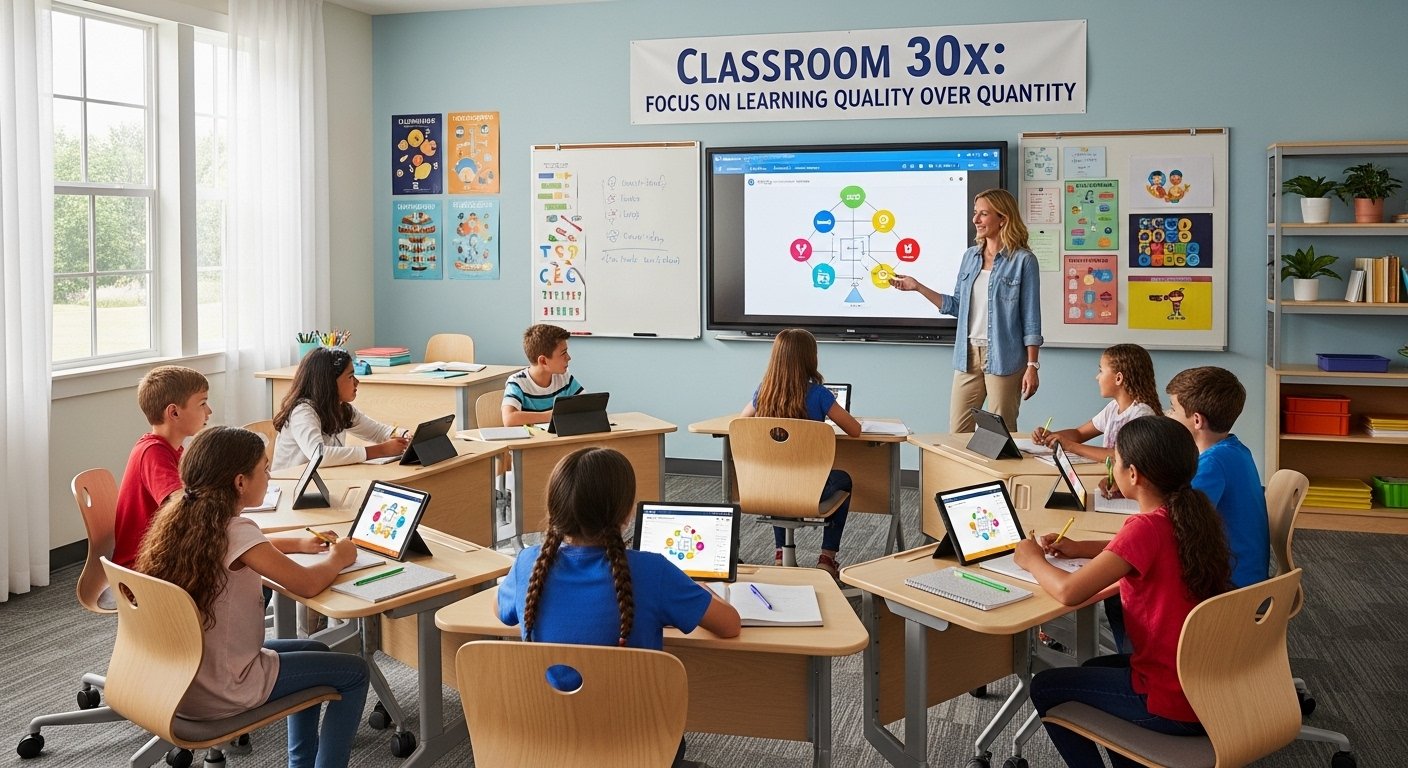
Imagine a classroom where every student’s unique learning style is embraced, and the focus is on understanding rather than just finishing tasks. Welcome to Classroom 30x—a revolutionary approach that prioritizes quality over quantity in education. In this innovative model, the goal isn’t about cramming as much information into students’ heads as possible but nurturing their curiosity and fostering deeper comprehension.
Gone are the days of rote memorization and endless worksheets. With Classroom 30x, educators aim to create an environment where meaningful engagement thrives. Students aren’t just passive recipients of knowledge; they become active participants in their learning journey.
Curious about how this transformation can reshape our educational landscape? Let’s dive deeper into what Classroom 30x really means for students, teachers, and the future of learning.
The drawbacks of traditional classroom settings
Traditional classroom settings often emphasize rote memorization over critical thinking. Students frequently sit in rows, passively absorbing information rather than actively engaging with it.
This structure can stifle creativity and collaboration. When learners are confined to a rigid format, they miss opportunities to explore diverse perspectives or develop problem-solving skills.
Moreover, traditional classrooms typically prioritize standardized testing. This focus may encourage teaching to the test instead of fostering genuine understanding and curiosity about subjects.
Additionally, students vary widely in learning styles and paces. A one-size-fits-all approach fails many individuals who need personalized attention or different methods of instruction.
The physical layout of traditional classrooms can be uninspiring and sterile. Such environments often lack the flexibility needed for interactive learning experiences that motivate students to thrive academically.
The benefits of Classroom 30x for students
Classroom 30x transforms the learning experience for students. It emphasizes depth over breadth, allowing them to grasp concepts thoroughly.
Students engage more deeply with materials. This approach fosters critical thinking and creativity. They aren’t just memorizing facts; they’re exploring ideas and making connections.
Moreover, Classroom 30x promotes individualized learning paths. Every student can progress at their own pace, ensuring that no one is left behind or rushed forward too quickly.
Collaboration thrives in this setting as well. Working together on projects enhances communication skills and builds teamwork abilities essential for future success.
Additionally, reduced stress levels often accompany a focus on quality learning. Students find themselves less overwhelmed by excessive content, leading to a more enjoyable educational journey.
This model encourages passion-driven exploration too. With time dedicated to diving into interests, students become lifelong learners excited about discovering new knowledge.
Examples of successful implementation of Classroom 30x
Classroom 30x has shown remarkable results in various educational settings. At a progressive high school in California, teachers adopted this model to enhance student engagement. By focusing on deeper learning experiences, students tackled real-world problems through project-based assessments.
In another example, an elementary school in Texas revamped its curriculum around Classroom 30x principles. Students worked collaboratively on thematic units that integrated multiple subjects. This method not only improved critical thinking but also fostered teamwork and communication skills.
A university in the Midwest embraced Classroom 30x by shifting from traditional lectures to interactive workshops. Faculty guided students through discussions and hands-on activities, resulting in higher retention rates and increased enthusiasm for learning.
These instances demonstrate how diverse institutions can successfully implement the Classroom 30x approach, leading to more profound educational outcomes across varying age groups and disciplines.
How teachers can transition to a Classroom 30x approach
Transitioning to a Classroom 30x approach starts with rethinking lesson plans. Teachers should prioritize depth over breadth by focusing on core concepts that spark curiosity and engagement.
Collaboration is key. Encourage students to work together, fostering an environment where they learn from one another. This not only deepens understanding but also builds essential communication skills.
Assessment methods must change as well. Instead of traditional tests, consider project-based evaluations or reflective journals. These allow students to demonstrate their knowledge in creative ways.
Professional development plays a crucial role too. Attend workshops or online courses centered around innovative teaching strategies aligned with the Classroom 30x model.
Embrace technology thoughtfully. Online resources can supplement learning while providing personalized pathways for each student’s journey through material.
Addressing concerns and potential challenges
When introducing Classroom 30x, concerns are bound to arise. Educators might worry about how to shift from traditional methods that have been in place for years.
One challenge is resource allocation. Schools may need additional tools or training to support this new approach effectively. It’s essential to recognize these needs early on and seek solutions collaboratively.
Another concern involves student adaptability. Some students thrive in structured environments and may struggle with a more flexible learning model. Gradually transitioning them can ease this adjustment.
Teachers themselves might feel overwhelmed by the prospect of changing their teaching style. Professional development sessions can provide much-needed guidance and reassurance during the transition period.
Communication plays a vital role as well. Engaging parents and stakeholders helps build understanding around the benefits of Classroom 30x, ensuring everyone is on board with its implementation journey.
Conclusion
Creating a more effective and meaningful learning environment with Classroom 30x involves a shift in perspective for educators, students, and administrators alike. Emphasizing quality over quantity can transform the educational experience, allowing students to engage deeply with content rather than skimming through information at an overwhelming pace.
By adopting the Classroom 30x model, schools can foster environments where critical thinking thrives. Students become active participants in their learning journeys instead of passive recipients of information. They develop essential skills that prepare them for future challenges—something traditional classrooms often overlook.
Teachers play a pivotal role in this transition. By embracing innovative teaching strategies and leveraging technology effectively, they can create dynamic lessons tailored to individual student needs. This approach not only enhances engagement but also builds stronger relationships between educators and learners.
As we move forward into an ever-evolving educational landscape, prioritizing quality learning experiences will shape well-rounded individuals equipped for success beyond school walls. The Classroom 30x philosophy stands as a beacon of hope for creating vibrant academic communities dedicated to fostering genuine understanding and lifelong curiosity among students.