

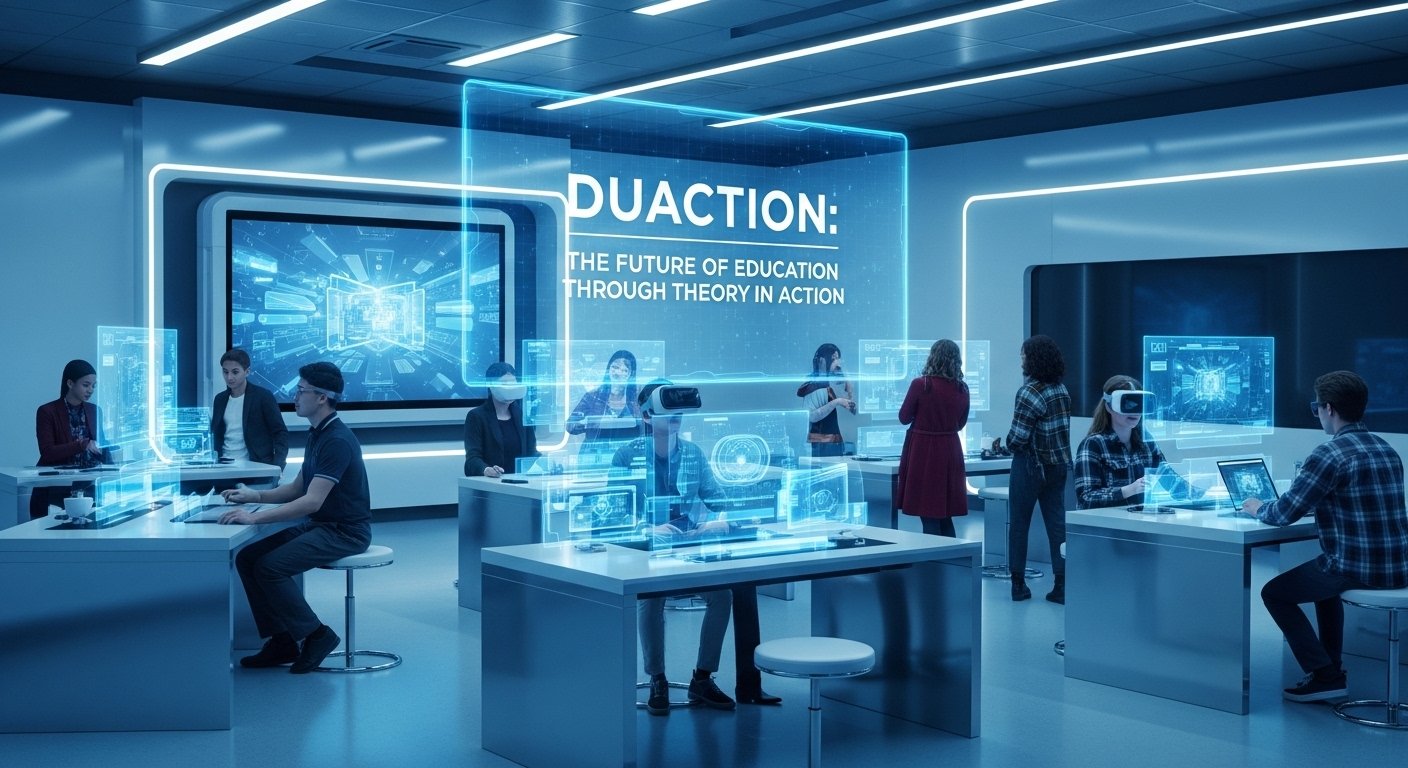
Education is on the brink of transformation, and at the heart of this evolution lies a groundbreaking concept known as Duaction. Imagine an approach that marries theory with practical application, empowering students to not only learn but also actively engage with their knowledge in real-world scenarios. This innovative method aims to redefine traditional learning paradigms, making education more relevant and impactful than ever before. As we delve into what Duaction entails, we will explore its core principles and understand how it might shape the future of education for generations to come.
Understanding the Theory in Action approach
The Theory in Action approach focuses on experiential learning. It bridges the gap between theoretical concepts and real-world applications. Students engage directly with their environment, allowing them to internalize knowledge.
This method encourages active participation. Learners tackle challenges through hands-on experiences that resonate with their interests and aspirations. The process fosters critical thinking, as students must analyze situations and make informed decisions.
Incorporating this approach within Duaction enhances retention of information. Rather than passively receiving content, learners become co-creators in the educational journey. They explore ideas dynamically, often leading to innovative solutions.
Moreover, it cultivates collaboration among peers. Group projects or community initiatives highlight teamwork’s importance while providing a platform for diverse perspectives. This interaction enriches the learning experience, making it more relevant and impactful for all involved individuals.
Benefits of implementing Duaction in education
Implementing Duaction in education offers a transformative approach that bridges theory and practice. Students gain practical skills aligned with real-world applications, enhancing their learning experience.
This method fosters critical thinking. Learners are encouraged to apply concepts in various contexts, promoting deeper understanding rather than rote memorization.
Additionally, engagement levels soar as students participate actively in their education. They move beyond passive learning environments and become co-creators of knowledge.
Diversity is another key benefit. Duaction programs can cater to different learning styles and cultural backgrounds, making education more inclusive and adaptable for all learners.
Furthermore, educators find themselves empowered to innovate. With the flexibility that Duaction provides, teachers can experiment with new techniques and tools that resonate better with today’s digital natives. This adaptability keeps curriculum relevant amid rapid societal changes.
Real-life examples of successful Duaction programs
Several institutions have embraced Duaction with remarkable results. One standout example is a progressive high school in California that integrated local environmental issues into its curriculum. Students engaged in hands-on projects, analyzing data and proposing solutions to real-world challenges.
Another noteworthy program comes from a university in Canada, where business students partnered with local entrepreneurs to develop sustainable practices. This collaboration allowed students to apply theoretical knowledge directly while benefiting their community.
In the UK, an innovative primary school has incorporated Duaction by merging arts education with social studies. Children create performances based on historical events, fostering creativity while deepening their understanding of the subject matter.
These examples showcase how Duaction cultivates critical thinking and problem-solving skills through practical experience, driving positive change both inside and outside the classroom.
Challenges and criticisms of Duaction
Despite its innovative approach, Duaction faces several challenges. One major concern is the potential for uneven implementation across different educational institutions. Not all schools have equal resources or training to adopt this new model effectively.
Critics argue that merging theory and practice can dilute academic rigor. They worry students may prioritize hands-on experiences over essential theoretical knowledge.
Another point of contention revolves around assessment methods. Traditional grading systems might struggle to quantify practical skills gained through Duaction, making it hard for educators to measure student success accurately.
Furthermore, some educators express apprehension about time constraints in a curriculum packed with both theoretical and practical elements. This could lead to an overwhelming experience for students trying to balance various learning styles within limited hours.
Resistance from traditionalists also poses a barrier; not everyone is ready to embrace such significant change in pedagogy.
The future of education with Duaction
The future of education is being transformed by Duaction, a dynamic blend of theory and practice. This innovative approach encourages learners to engage deeply with concepts through real-world applications.
As technology evolves, so does the potential for Duaction to enhance personalized learning experiences. Students can explore their interests while demonstrating knowledge in meaningful ways. The flexibility offered by this model fosters creativity and critical thinking.
Collaboration among educators, industry leaders, and students will shape curricula that reflect contemporary challenges. With an emphasis on experiential learning, skills gained in the classroom will translate seamlessly into professional environments.
Moreover, as educational institutions embrace digital tools and platforms, Duaction promises accessibility like never before. Learners from diverse backgrounds can participate fully in this exciting new paradigm.
By prioritizing hands-on experience alongside theoretical understanding, the landscape of education is set for a remarkable evolution with Duaction at its core.
Conclusion
The emergence of Duaction presents an exciting opportunity for educators and students alike. By integrating theory with practical application, this innovative approach transforms the learning landscape. Students not only absorb information but also engage with it in meaningful ways, preparing them for real-world challenges.
As schools and institutions adopt Duaction, we can expect a shift towards more dynamic curriculums that prioritize hands-on experiences alongside traditional academic rigor. This blend fosters critical thinking, creativity, and collaboration among learners—skills essential in today’s rapidly changing world.
Embracing Duaction means nurturing a generation of thinkers who are well-equipped to navigate complexities both inside and outside the classroom. The potential impact on education is profound; as we move forward, the focus will increasingly be on creating environments where theory is not just learned but actively lived out through action. It’s time to look ahead at what education can become when we fully embrace this transformative model.